“The quality of our lives depends not on whether or not we have conflicts, but on how we respond to them.” – Thomas Crum, author, and presenter in the fields of conflict resolution, peak performance, and stress management.
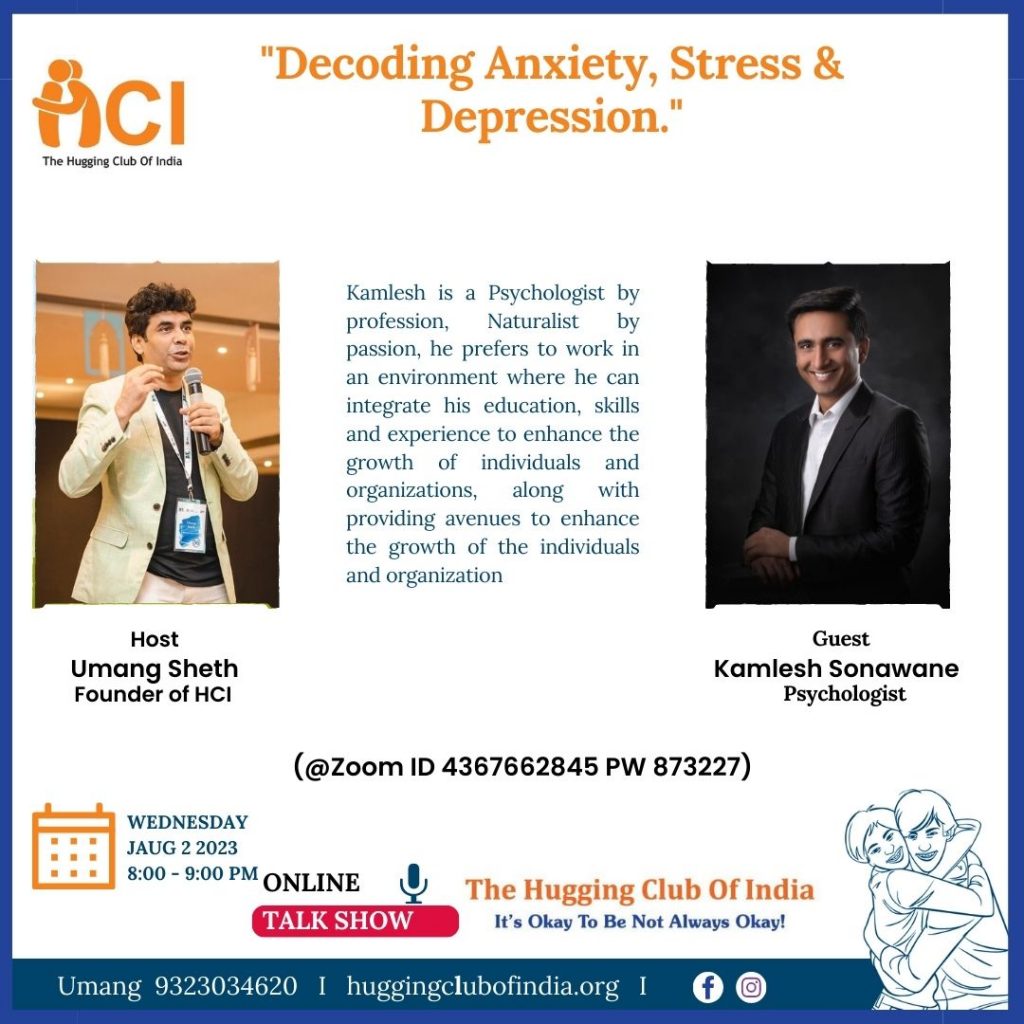
This is the quote with which our guest speaker Kamlesh Sonawane started the session with us. Kamlesh is an accomplished and experienced psychologist based in Pune. He took an online session for HCI on 2nd August, 2023 on the topic – ‘Decoding Anxiety, Stress and Depression’.
Acknowledging the fact that you have certain issues is the point where the self-improvement journey begins, according to Kamlesh. Whenever there is a conflict between two parties and if someone enquires about it from one of them, a commonly heard reply is “I told him so many times, but he was not ready to understand!”. The solution to the issue is hidden within this statement. That’s where the journey of knowing ourselves begins.
A research study says that climate change could wipe out life on earth in the next 100 years. Because of this there is so much stress and anxiety in humans that we will ensure our species gets extinct within 20 years! This is the extent to which stress and anxiety can affect us.

Imagine yourself as an onion that has layers within. Our first layer is how we are visible or how we portray ourself to the society in general, to those people who don’t know us. Now let’s peel off this layer and come to the second layer, which is how our family and friends perceive us or how we portray ourselves to them. Let’s peel off this second layer too. We reach a third layer, probably the most important one – our inner self. Think about how we perceive our own self. We now have 3 answers for each of the 3 layers. Majority of the times all the 3 descriptions will be different. How we view ourselves is usually not the same as how our friends and family or strangers perceive us. This is the origin of our stress, anxieties and depression. ‘Know yourself” is the first step to resolving issues related to mental health issues. Self-study and study of the self is how Kamlesh put it very simply.
When you visit a mental health professional, they will simply build up your coping skills to allow you to deal with any issues. They will not treat you forever. Once you have developed coping skills, you will have the ability to deal with further issues on you own.
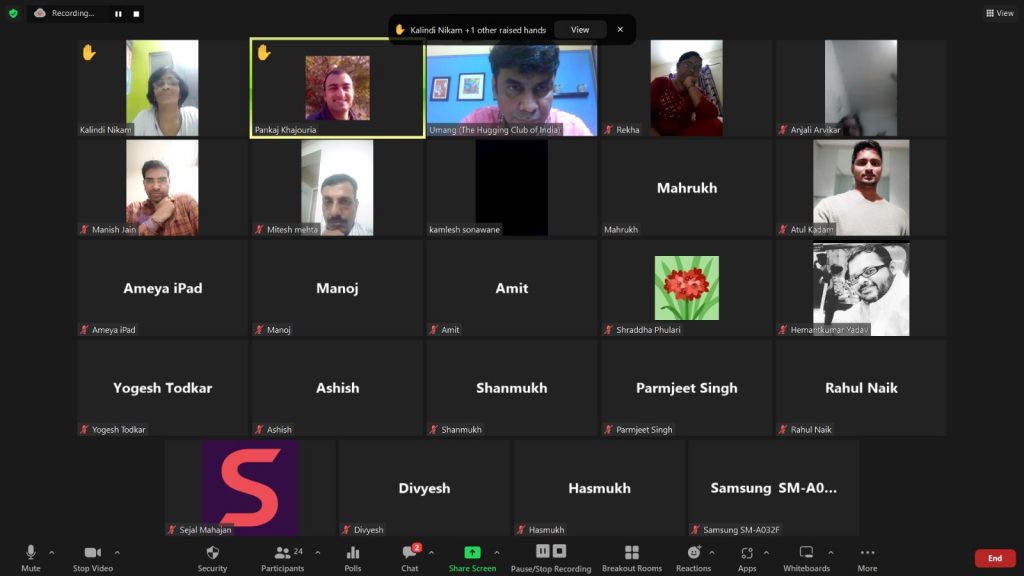
Depression is more dangerous than cancer, according to the World Health Organization (WHO). It is a silent pandemic and people need to be aware of this so that they talk about it and do not avoid approaching a mental health professional when required. India has the largest number of clinical depression cases in the world, as per statistics available. Every 1 in 20 persons in India is going through depression. The number of such people in India would be equal to the population of a European country. That is the extent to which this issue has spread. From 2021 to 2030, the world economy will lose about $3 trillion just because of productivity lost due to mental health issues. This is approximately the entire GDP of India.
Anxiety and depression get classified under mental illnesses, whereas stress is some sort of mental pressure that affects us in our day to day lives.
Stress happens due to our present conditions. Indicators of stress are: unable to concentrate, get frustrated, etc.

Anxiety is something that happens frequently. Reason for anxiety is usually unknown and that is what triggers the anxiety. The person would know he is not feeling well but would not know the exact reason. For example, someone could get anxious in the dark without knowing why. Going to a particular place or being in a particular situation or condition may create an anxiety without any evident reason. Phobias also develop due to anxiety. Indicators of anxiety are muscle tension, shortness of breath, abnormal heart beats, a fear of unknown and irritability.
Depression is majorly linked to the past. Some events or circumstances from our past trouble us and keep coming back to us. This could lead to depression. An important indicator of depression is irregular sleep patterns even while following regular daily patterns. Loss of appetite is also an indicator of depression.
Kamlesh shared a heart breaking story of a friend who died by suicide. He made a very thought-provoking comment that the thought of suicide appears for a few moments and if we can overcome those few moments, we have the ability to get out of that impulse. Unfortunately, it is in those few moments that his friend was taken away. We need to take an effort to listen to people who express any suicidal feelings and if there is any such thought expressed even once, it should not be taken lightly. Ask the person about his issues, listen to him intently, show genuine concern and guide the person to take professional help. When someone really ‘listens’, the healing process automatically begins.
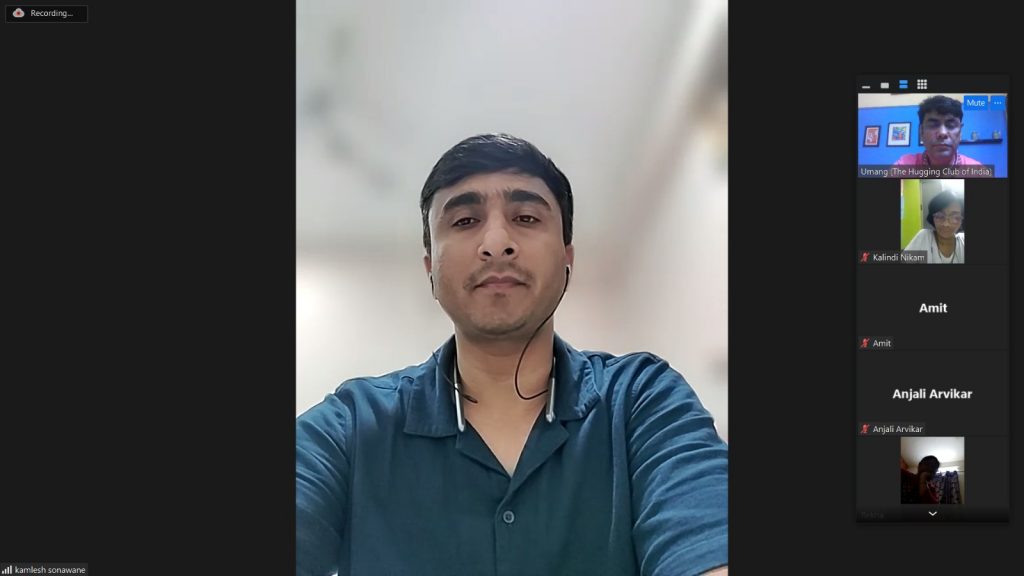
The session was followed by a question and answer session where participants were forthcoming about their issues and Kamlesh was very empathetic, patient and motivating. His insights to the issues were helpful and he guided the participants to explore possible solutions.
– Written by Amit Rai
– Compiled by Amol More
– Edited and Updated by Mahrukh
Leave a Reply